

Referred to as “White Mountain”, Dhaulagiri is a mountain massif in the Himalayas of Nepal.
It is one of the most remote and captivating trekking destinations, located in the Gandaki province.
Separated by the Kali Gandaki Gorge, it is approximately 65 kilometers northwest from Annapurna.
It stands at 8,167 meters (26,795 feet), which is the seventh highest peak in the world, covered in snow and glaciers. Many adventurers flock here to witness its pristine beauty.
Especially for the Dhaulagiri Circuit trek, which takes you around the entire Dhaulagiri massif.
This venture features challenging high altitude passes, traditional villages and stunning views of the Himalayan peaks.
If you have interest in exploring the natural beauty of the Himalayas, this region offers adventure like no other.
Why visit the Dhaulagiri region?
Are you seeking raw wilderness, solitude and a deep connection with nature.
Dhaulagiri is the perfect destination in the remotest part of Nepal.
Here’s why you should visit the Dhaulagiri region:
- Dhaulagiri I is one of 14 mountains on Earth that is over 8,000 meters altitude.
- Untouched by the mass tourists, unlike the Everest trek and Annapurna circuits, it offers a true sense of adventure.
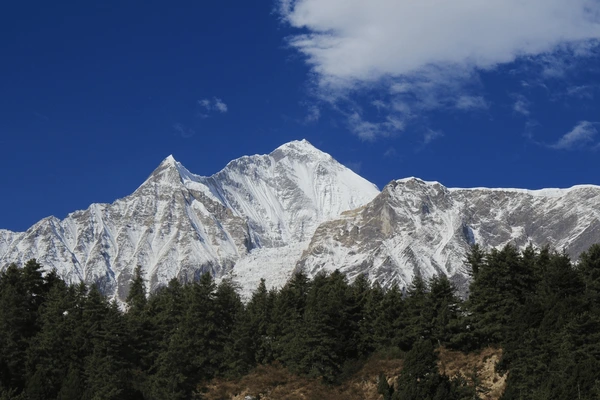
- A group of seven principal peaks form the Dhaulagiri massifs. Together, they offer trekkers a breathtaking panorama of snow-capped mountains.
- The region offers peaks that pierce the sky, crystal clear rivers and deep valleys.
- Trekking in the Dhaulagiri region takes you to two high-altitude passes. The French Pass (5,630 meters) and Dhampus Pass (5,200 meters), which challenge even experienced trekkers.
- Experience the rich cultures of different communities such as Magars, Gurungs and Thakalis.
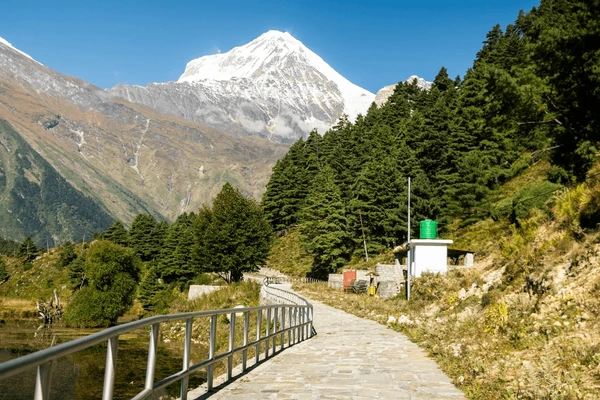
- Dhaulagiri region trekking takes you through dense, lush forests, alpine meadows and hidden valleys.
- Learn about the rich cultural heritage and ancient way of life in the Himalayan villages.
History of Dhaulagiri Region
In terms of both cultural significance and mountaineering, Dhaulagiri region has a fascinating and rich history.
It stands as a testament to nature’s raw power and beauty.
Let’s explore what made this region one of the iconic landscapes of Nepal.
Early History and Exploration
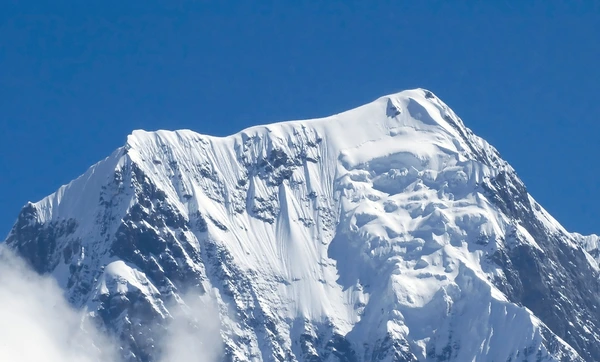
The name “Dhaulagiri” is coined from Sanskrit, where “Dhaula” means dazzling or white and “Giri” means mountain.
The term perfectly describes this formidable snow capped mountain.
Until the 19th century, it was largely left unexplored.
In 1808, Dhaulagiri I was officially marked on the map.
And you know something interesting?
It was thought to be the world’s highest mountain until Kanchenjunga was discovered in 1838.
First Dhaulagiri I Ascent
A team of 6 members successfully climbed Dhaulagiri I, the 7th highest mountain in the world.
Peter Diener, Ernst Forrer, Albin Schlebert, Niyma Dorje Sherpa, Nawang Dorje Sherpa, and Kurt Diemberger.
This expedition was led by Max Eiselin. For this climb, they used a unique approach of aerial support (ski-wheeled plane) to drop supplies and men above 18,700 feet.
This climbing expedition was made via the Northeast ridge, which is now a common route for climbers.
There are other routes to summit the mountain.
However, the south face and the east face are highly difficult and technical routes.
Trade Route
In the distant past, the Kali Gandaki Valley in between the Dhaulagiri and Annapurna massif, was used as a major trade route.
Salt traders and pilgrims from Nepal and Tibet traveled from these paths before the explorer from the west arrived.
The route helped in exchanging goods and culture.
This path that runs alongside the Kali Gandaki River is utilized by many trekkers today as well.
Cultural Significance
The region holds great cultural significance for the indigenous people living in these areas for generations.
Gurungs, Magars and Thakalis communities developed unique customs, religious practices and traditions that intertwine with the landscapes.
These local people consider Dhaulagiri mountain as sacred.
Also the region is influenced by Tibetan Buddhism culture which is visible in the trail.
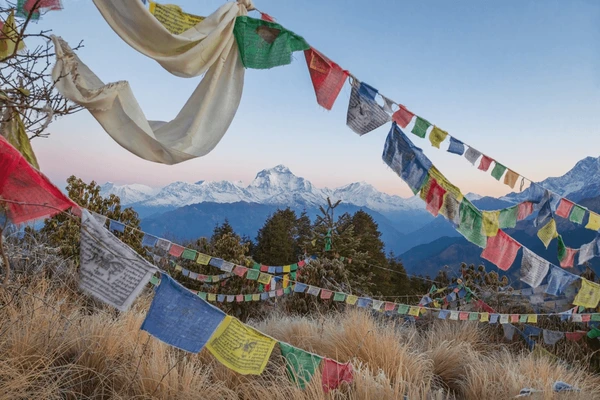
The route is adorned with prayer flags, chortens and mani walls.
Trekking Routes in Dhaulagiri Region
Dhaulagiri offers some of the most challenging and remote trekking routes in Nepal.
It leads you to remote wilderness, from lush forests to high altitude passes. The Dhaulagiri Circuit trek is the most famous of these treks.
However, there are other trekking routes that provide amazing trekking experiences.
Dhaulagiri Circuit Trek
Duration: 18-21 days
Max Altitude: 5,360 meters
Difficulty: Challenging
Highlights: Dhaulagiri base camp, French pass, Dhampus pass and Hidden valley
Hidden Valley Trek
Duration: 7-10 days
Max Altitude: 5,200 meters
Difficulty: Challenging
Highlights: French pass, Remote landscapes and Hidden valley
French Pass and Dhampus Pass Trek
Duration: 14-18 days
Max Altitude: 5,360 meters
Difficulty: Challenging
Highlights: Dhampus pass, French pass, Hidden valley and Panoramic views of Dhaulagiri massif
Italian Base Camp Trek
Duration: 10-12 days
Max Altitude: 3,600 meters
Difficulty: Moderate
Highlights: Italian base camp, Myagdi river path trekking and Stunning views of Himalayas
Tukuche Peak Climbing Trek
Duration: 20-22 days
Max Altitude: 6,920 meters
Difficulty: Extremely Challenging
Highlights: French pass, Tukuche peak, Hidden valley and Climbing expedition
Jomsom to Dhaulagiri Trek
Duration: 10-14 days
Max Altitude: 4,000 meters (depends on the route)
Difficulty: Moderate
Highlights: Breathtaking mountain vistas, Jomsom, Traditional villages and Local culture experience
Tour Operator Nepal: Dhaulagiri Trek Package
19 Days Dhaulagiri Circuit Trek Details
DURATION: 18 Days | 17 Nights
DIFFICULTY: Challenging
STARTING POINT: Kathmandu, Nepal
MAX ALTITUDE: 5,360 meters
MEALS: Breakfast, lunch and dinner
PLACE TO STAY: Tea houses | Tents
ACTIVITIES: Trekking
GROUP SIZE: Min 2-12
BEST SEASON: April to May | September to October
Highlights of Dhaulagiri Circuit Trek
- Enjoy a scenic drive from KTM to Machha Khola, witnessing varied landscape and running water along the journey.
- Witness the majestic views of Dhaulagiri and other surrounding peaks that form the Dhaulagiri massifs.
- Cross the challenging Dhampus pass and French pass.
- Experience the traditions and way of living of Gurungs, Magars and Thakali communities.
- There exist natural hot springs where you can relax.
- Explore the villages that Tibetan Buddhism influences.
Flora and Fauna in Dhaulagiri Region
Dhaulagiri Region’s Flora
Through the diverse ecological zones, each features its unique flora.
Below are some floras found in these regions:
- Rhododendron tree
- Oaktree
- Pine tree
- Maple tree
- Walnut tree
- Hardy Shrubs
- Juniper bushes
- Edelweiss
- Blue poppies
- Dwarf bamboo
Dhaulagiri Region’s Fauna
The varying ecosystem of this region supports wide ranges of wildlife, including rare and endangered species.
Some wildlife in Dhaulagiri areas are:
Mammals
- Snow leopard
- Blue sheep
- Himalayan Tahr
- Musk deer
- Langur monkeys
Birds
- Himalayan Griffon
- Danphe
- Blood pheasant
- Golden Eagle
Festivals and Celebrations
Many celebrations and festivals on the Dhaulagiri are tied to Hindu and Buddhist traditions.
If you trek in Dhaulagiri region during the festival months, you will be able to engage in these festivals.
Tihar
Celebrated by both Buddhists and Hindus, Tihar is the festival of colors and lights.
The people decorate their homes with oil lamps and flowers.
Villagers gather to perform traditional dances.
People honor cows, dogs and crows as sacred animals at this festival.
Lhosar
The start of the Tibetan New Year, Lhosar is celebrated by the Tibetan Buddhist people in Dhaulagiri.
In this festival, monastery rituals, prayer ceremonies and community feasts are organized.
Buddhist monks perform dance rituals called “Cham” to ward off evil spirits.
Maghe Sankranti
Magar and Tharu communities hold great importance to the Maghi festival.
Maghe Sankranti marks the start of a new agricultural year.
Families gather and celebrate the festival with sesame seed treats, yams and ghee.
Accommodations and Foods in Dhaulagiri Region
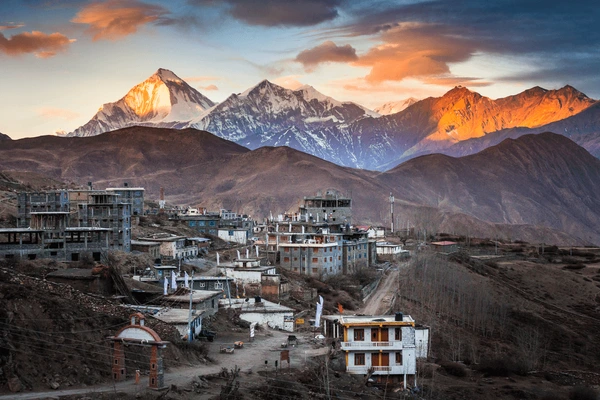
Housings
Tea Houses and Lodges
Traditional teahouses and basic lodges line the lower areas of the Dhaulagiri trek, such as Beni, Babichaur, and Muri.
Housing is basic, shared with twin-sharing rooms and shared bathrooms.
Basic as they are, these will afford trekkers a warm space to rest in at the close of their day’s hike.
Also the hot meals will rejuvenate their bodies and provide opportunities to engage with locals.
Tent Camping
During the ascend into the more remote parts, tent camping becomes the only option, such as in Italian Base Camp, Glacier Camp, and Dhaulagiri Base Camp.
The camps that are high altitude are pretty rugged.
Thus, trekkers have to spend time in portable tents set up by the trekking crew.
These camps provide views for a more immersive and wild experience with nature.
Guides provide sleeping bags, insulated mats and cooking gear in order to keep trekkers warm and comfortable.
Foods
Dal bhat tarkari
This is a Nepali high calorie food served with rice, lentil soup and vegetables or sometimes meat.
Dal bhat is a go-to meal for most trekkers as it fuels them for long days of hiking.
Momo
One of the most popular foods of Nepal, Momo is filled with vegetables or meat.
They are mostly steamed or fried and savored by dipping them with flavor sauce.
Thukpa
Thukpa is a warm hot noodle soup that is perfect for cold weather.
Porridge, pancakes, pasta and eggs
Porridge, pasta and egg are served to kickstart your day with energy.
While pasta is offered for lunch or dinner.
Hot beverages and snacks
Hot drinks such as tea, coffee and masala chai are a regular while trekking in the high altitudes.
For snacks, you can have a go at Tibetan bread with jam or eggs.
Energy bars also help with fueling you with energy while on treks.
FAQs
Where is Dhaulagiri located?
Dhaulagiri is located in the Myagdi district of Nepal’s Gandaki province, northwest of the Annapurna range.
It is a massif that extends up to 120 km, separated by the Kali Gandaki Gorge, the deepest river gorge in the world.
How tall is Mount Dhaulagiri?
Mt Dhaulagiri lies at a staggering 8,167 meters from sea level, which makes it the seventh highest mountain in the world.
What is Dhaulagiri famous for?
Dhaulagiri is famous for having rigorous trekking routes, high altitude passes as well as remote regions.
It is renowned as white mountain as it is covered in glaciers and snow.
What are the mountains that make up the Dhaulagiri massifs?
Dhaulagiri massifs consist of seven principal peaks; Dhaulagiri I, II, III, IV, V, VI and Churen Himal.
It also includes lower peaks which are Gurja Himal, Tukuche and Putha Hiunchuli.
Connect with Tour Operator Nepal
Are you seeking an thrilling adventure into the shadows of Nepal’s Himalayas?
The journey in the Dhaulagiri offers challenging treks, stunning landscape vistas and rich cultural experiences.
At Tour Operator Nepal, we offer not only exciting but also life-changing adventures.
So what are you waiting for?
Reach out to us now and let us help you plan your adventures.