

Bardiya National Park, the largest national park in Terai region of Nepal, is a hidden wildlife gem.
Covering an area of 968 square km, this national park is home to many endangered and imposing animals.
And the best part:
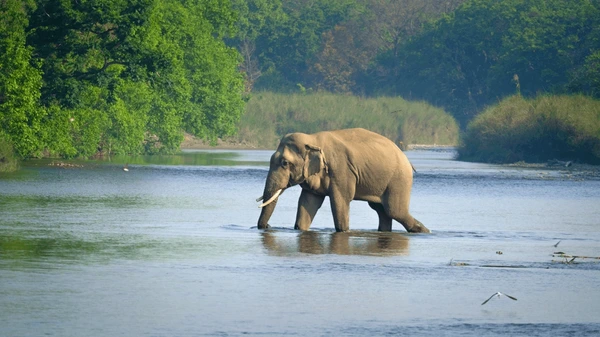
Unlike other busier tourist spots like Chitwan National Park, Bardiya Nepal offers a quiet, raw and serene environment. Imagine the fun of tracking a Bengal tiger hunting for its prey or looking at a herd of elephants roaming along the banks of Karnali river.
In Bardia National Park, nature dominates its rule and every part showcases the story of survival of the fittest.
If you are seeking something rare and unique jungle safari experience, then Bardiya is where your exploration begins.
Why Visit Bardiya National Park?
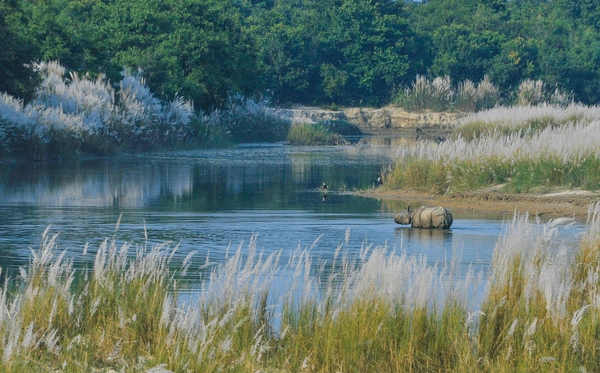
Where will you find immersive and off the grid adventure like Bardiya National Park?
The answer is no where.
From lush jungles fostering diverse wildlife to untouched landscapes, it hosts a sanctuary where rhythm of nature dictates the day.
Here are some reasons why you should visit the Bardia National Park:
- Experience the Man vs Wild in real time with experienced guides by your side.
- Enjoy in a peaceful National Park where the landscapes are untouched by tourist crowds.
- Observe the majestic animals like Royal Bengal tigers, one horned rhinos and wild elephants roaming in their natural habitats- up close.
- Here, over 250 species of birds flock, making this National Park a haven for birdwatchers. Be attentive to sight Bengal florican, white-rumped vulture and other rare bird species.
- Immerse fully in this protected area, navigating by jeep safari, guided jungle walks or canoe ride down the Karnali river.
- Apart from wildlife and nature, Bardiya Nepal is rich in cultural experiences. Explore Tharu village and observe these indigenous people, who have considered this area home for over centuries.
History of Bardiya National Park
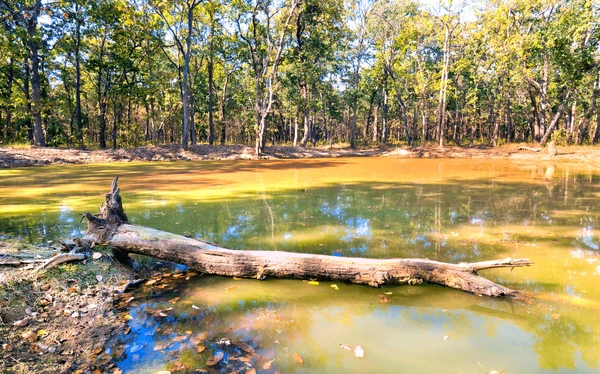
The Bardiya National Park region was once lost to the East India Company, only to be reclaimed after 45 years. In 1815, this land was ceded to the expanding empire of British India under the Sugauli treaty.
But fate has other plans.
Nepal played an important role in suppressing the Indian Independence movement in 1857.
This role of Nepal was recognized and the region was given back as a reward in 1860, earning the name Naya-Muluk (New Country). As time passed by, came the year 1969, when an area of 368 square km was turned into the Royal Hunting Reserve.
Here, the Nepalese royalty enjoyed their hunting game across the dense jungles and grasslands.
A dawn of a new era of protection and conservation began in 1976, as the area was announced as Royal Karnali Wildlife Reserve.
The area was again renamed the Royal Bardiya Wildlife Reserve in 1982 and the area was extended to include Babai River Valley in 1984. But the most significant transformation came in 1988 when this reserve was officially declared Royal Bardia National Park.
Translocations of Greater One-horned Rhinoceros were done from Chitwan National Park to Bardia National Park in 1986, 1991, 1999, 2000, 2001, 2002, 2003, 2016, and 2017.
The 1,500 residents who once lived here were relocated.
This led to Babai Valley to rejuvenate and grow in health, becoming the perfect habitat for the amazing wildlife we see today.
So the region went through a time of colonial annexation, a part of royal hunting, leading it to a thriving national park.
Tour Operator Nepal: 4 Days Bardiya Jungle Safari
DURATION: 4 Days | 3 Nights
DIFFICULTY: Easy
STARTING POINT: Kathmandu
MAX ALTITUDE: 1,55 meters
LODGING: Luxury Resorts
MEALS: Three Time (Breakfast, Lunch and Dinner)
ACTIVITIES: Wildlife Safari
MAX SIZE: Min 2
TRANSPORTATION: Flight | Private Vehicles
BEST SEASON: January-May | September-December
Highlights of the Bardiya Jungle Safari (4 Days)
- Begin your adventure with a flight from Kathmandu to Nepalgunj, enjoying stunning aerial views of Terai landscapes.
- While on the Bardiya National Park tours, the experts and naturalists will help you explore and get an understanding about the park’s rich ecosystem.
- Delve deeper into the beauty of Bardiya with jungle nature walks led by highly experienced guides, sharing information about the flora and fauna.
- Enjoy birdwatching and photograph the critically endangered birds flying above your head, which is a dream for bird lovers.
- Get up close with the rare wildlife such as Bengal tigers, 1-horned rhinos and Indian elephants, while exploring the park’s rich bio-diversity on your Bardiya jungle safari.
- Enjoy cameo riding on Karnali River, spotting crocodiles, gangetic dolphins and other wildlife along the banks.
- Get understanding of Nepal’s wildlife conservation of crocodiles, tigers and elephants.
- Interact with the local communities and immerse yourself in the rich Tharu cultures. Gain deeper insights of this region’s life from traditional dances to stories passed over centuries.
- Inspect the Bardiya National Park area with a unique perspective of the jungle safari with elephants riding through the dense Bardiya forests.
Best Time to Visit Bardiya National Park
Planning your visit to Bardiya?
Here’s how Bardiya National Park weather looks in different seasons and how they shape your adventure.
Best Season: October to March
It is best to go on a visit to Bardiya National Park from October through March because of the cool, dry climate that is ideal for safaris. During this time, wild animals like Bengal tigers, rhinoceroses and wild elephants are active.
The landscape is lush, making the park easily accessible.
The temperature hovers between 10°C to 25° C for full-day jungle explorations, canoeing trips and spotting wildlife.
April to June: Hot and Dry, Up to 42° C
If you can take the heat, from April to June, the weather is dry and hot, often up to 42° C. However it is an excellent time for keen wildlife enthusiasts.
Animals come together around water sources and hence, viewing them is relatively easy.
Safaris during these months are dramatically eventful, but this is the heat you should be prepared for.
July to September: Monsoon Season
Heavy rainfall pours these regions in the monsoon period, starting from July through September.
The trails in the park are muddy and some areas are not accessible. Though the dense greenery looks astounding, many safari activities become limited.
Moreover, wildlife spotting becomes more difficult because of the thick vegetation.
Animals in Bardiya National Park Nepal
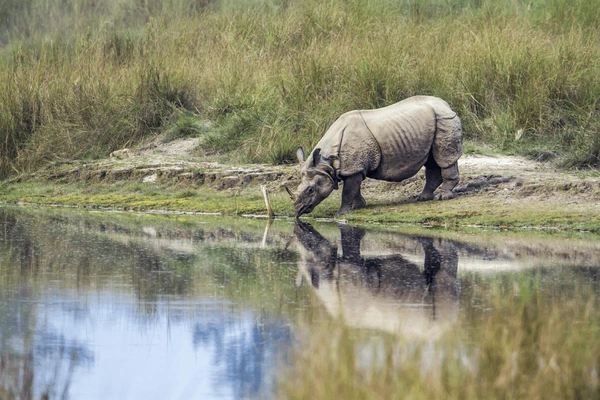
Mammals
Below are lists of some mammals found in Bardiya Park:
- Royal Bengal tiger
- One-horned rhinoceros
- Wild Indian elephant
- Gangetic dolphin
- Leopard
- Barasingha
- Sloth bear
- Rusty-spotted cat
Reptiles
Some reptiles found in Bardiya park are:
- Gharial crocodile
- Mugger crocodile
- Cobra
- Frog
Birds in Bardiya National Park Nepal
Bardiya park hosts diverse species of birds from endangered ones to common ones. Some of them are:
- Bengal florican
- White-rumped vulture
- Peafowl (peacock)
- Bar-headed geese (migratory bird from Tibet and Mongolia)
- Sarus crane
- Grey-crowned prinia
- Northern shoveler (migratory bird from Siberia)
FAQs
Why is Bardiya National Park famous?
Bardiya National Park is famous for its outstanding conservation of Bengal tigers, one horned rhinos and wild elephants.
The park provides authentic wildlife experiences compared to other parks, making it a must visit destination for wildlife and nature lovers alike.
What are the unique features of Bardiya National Park?
The unique features of Bardiya National Park are:
- It is the largest and most undisturbed protected area in Terai region of Nepal.
- Hosts over 800 species of flora and over 600 species of fauna.
- Features a blend of forests, savannah, grasslands and riverine forests including Babai River Valley.
- Has a buffer zone with an area of 327 square km.
Where does Bardia National Park lie?
Bardia National Park lies in the Terai region of Bardiya district Nepal, joining Karnali river and divided by the Babai river.
How safe is Bardiya jungle safari tour?
The Bardia Jungle safari tour is secure to venture on, as you will be escorted by experienced guides.
They know all the safety measures to keep you as well as the wildlife safe during the Bardiya jungle tour.
How many tigers are in Bardia?
The total number of tigers in Bardia has grown to 125, recorded in the report of 2022.
The number has grown from 18 tigers which was reported in 2010.
Connect with Tour Operator Nepal
Are you someone who wants to explore Nepal jungle, natural wonders or cultural tours?
Tour Operator Nepal brings adventures that will keep you entertained and thrilled.