

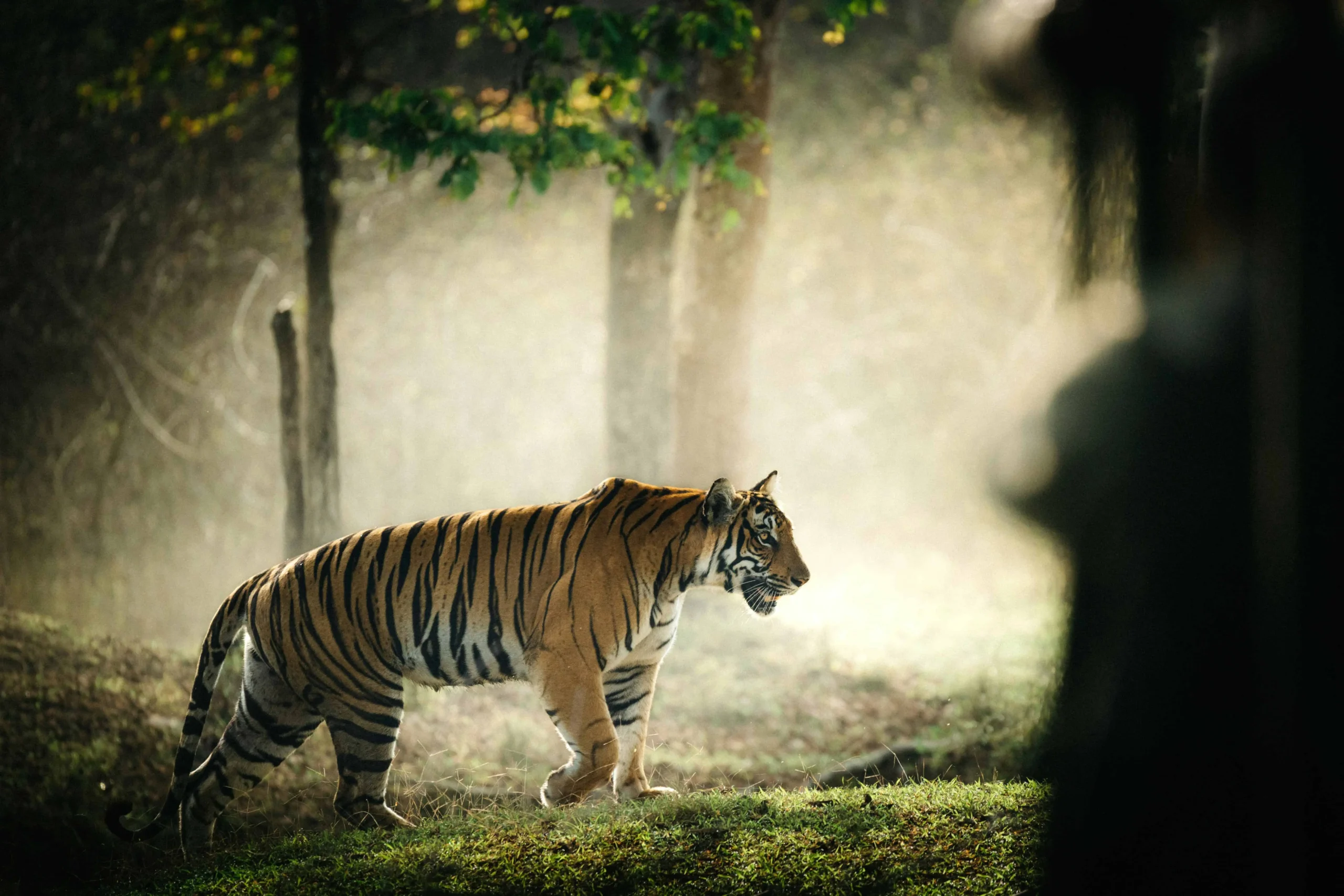
Encounter the Bengal Tiger in Chitwan National Park
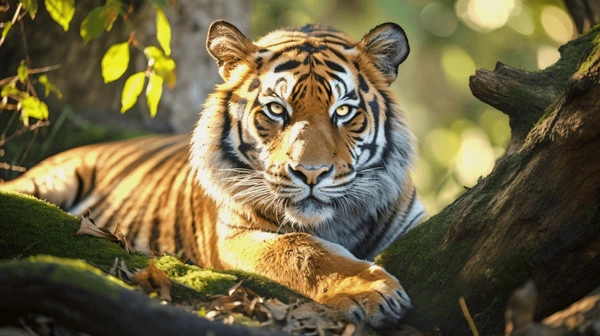
Imagine walking down a quiet forest trail of Chitwan as the smell of damp earth and leaves fills your lungs.
Then your guide falls silent, pointing towards a certain direction.
First, you see nothing but shifting shadows.
Then those shadows begin to take a form, muscular shape striped with oranges and inky blacks.
This is the Royal Bengal Tiger in Chitwan National Park.
Everything around you, including birds chirping and insect sounds, fades away after this majestic encounter.
Your heart pounds as you lock eyes with a Chitwan National Park Bengal Tiger.
No cage or barrier, just two living beings sharing the same wild space.
You may have mixed emotions of awe and fear simultaneously.
You will feel as if the world has slowed down and a feeling of respect develops for this creature’s beauty and strength.
This encounter is a rare experience that will remain
in your memories.
Chitwan National Park
Chitwan National Park is a UNESCO World Heritage Site with its rich forests and thriving wildlife.
Located in the Nepalese lowlands, this nature haven has the best environment for one of the magnificent predators.
The Bengal Tiger in Chitwan National Park is one of the most striking wildlife, roaming in the heart of the Terai region.
This world heritage site has dense forests, tall grasslands and winding rivers that form the perfect hunting ground for these apex predators.
Most visitors consider it the best place to get a glimpse of the wild Chitwan National Park Bengal Tiger.
Adventure lovers come here for much more besides spotting tigers.
You can enjoy jungle walks, jeep safaris, elephant safaris and feel the raw energy of Chitwan’s wild nature.
Among the top national parks in Nepal, Chitwan and Bardiya National Park stands out for its well-focused tiger conservation.
Every visit goes to the protection of these magnificent creatures so that future generations can also have a glimpse of the Chitwan National Park Bengal Tiger in all its glory.
The Royal Bengal Tiger in Chitwan National Park
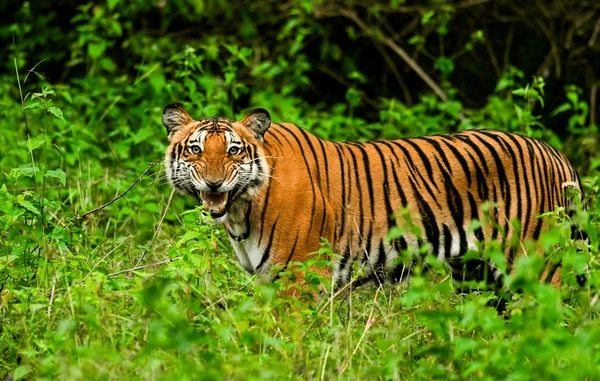
The Bengal tiger is the strongest wild animal in Chitwan National Park.
Their muscular body with bold stripes and sharp sense makes them a great hunter.
With silent confidence, it moves through thick vegetation till just that perfect moment to strike its prey.
Besides that, it has strong jaws and razor-sharp claws, making it an apex predator of the Chitwan jungle’s ecosystem.
The Bengal tigers are solitary and patrol their territories behaviorally.
They avoid direct contact with others of their kind, except when it involves mating or a mother rearing her cubs.
They are patient and tactical, relying on camouflage and stalking carefully to catch their prey.
Though the tiger is an animal commanding fear and respect, it is also a sensitive indicator of the general state of health of the forest.
When tigers are doing well, it is an indication that their prey is abundant, vegetation is in order and the whole ecosystem is running on track.
Their role has gone even beyond such an impressive presence.
Tigers keep the sensitive web of life to maintain the healthiness of the forest while preying on herbivores.
Size and Physical Characteristics
In ideal habitats like Chitwan, male tigers weigh about 167 kilograms to 234 kilograms and female tigers can range from 132 kilograms to 156 kilograms.
The average length of male tigers can reach up to 282 cm, whereas female tigers’ length averages around 254 cm.
Such figures represent some of the largest free-ranging tigers known to science.
Besides their overall size, the coloring of Bengal tigers is bright yellow-orange with dark vertical stripes.
These stripes allow them to merge with the forest shadows and make noiseless hunts of their prey.
Population of Bengal Tiger
Originally, the Bengal tiger was found from the Indus River valley down to almost all of India, Pakistan, south Nepal, Bangladesh, Bhutan and China.
These species of big cats thrived well in tropical evergreen forests and alluvial grasslands.
But, these cats’ numbers shrunk due to habitat loss, human conflicts and other things.
When Chitwan was established as a national park in 1973, it only had approximately 25 individuals of Bengal tigers (Panthera tigris) then in this park.
In 1980, the number was recorded as the highest at about 70-110 individuals.
Camera traps laid during 2010 and 2011 indicated the density of the tiger to range between 4.44 and 6.35 individuals per 100 km² (39 sq mi).
According to the survey conducted in 2022, there are around 128 Royal Bengal Tigers in Chitwan National Park, making it the largest playground for tigers in Nepal.
The number of tigers in Nepal has almost doubled since 2009, when only 121 tigers were recorded.
As of 2022, the estimated number of tigers in India was 3,167 to 3,682, 316 to 355 in Nepal, 131 in Bhutan and approximately, 114 in Bangladesh.
Why Chitwan is Perfect for the Bengal Tiger?
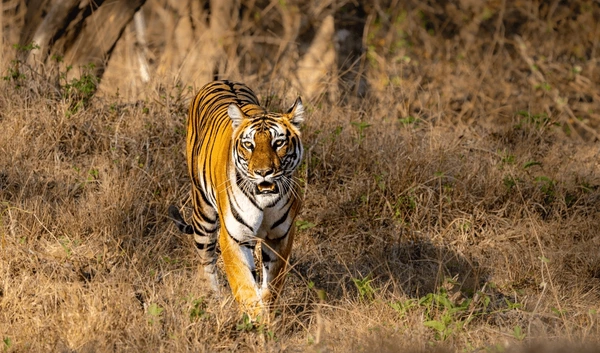
Chitwan National Park is perfect for Bengal tigers because it has abundant habitats and abundant prey.
Thick forests and tall grasslands exist that help stripe-coated tigers ambush wild boar and deer with great precision.
Nearby rivers and wetlands provide enough water for these predators and their prey.
In this open area, tigers find all their required resources to thrive, which makes Chitwan National Park a stronghold for these wild animals.
Buffer Zone
This buffer zone is the area around Chitwan National Park that helps both tigers and people to coexist with each other.
Think of it as a friendly boundary between the deep forest and the places where people grow crops or keep animals.
By keeping the Bengal tigers of Chitwan National Park away from farms and villages, this zone lessens the chances of wild animals and humans having problems.
On top, the local communities learn to conserve the forest and receive some form of income from nature treatment.
This is one of the ways a buffer zone allows tigers to find enough space and food, people stay safe and both benefit from a healthy and rich environment.
Wildlife in Chitwan beyond Tigers
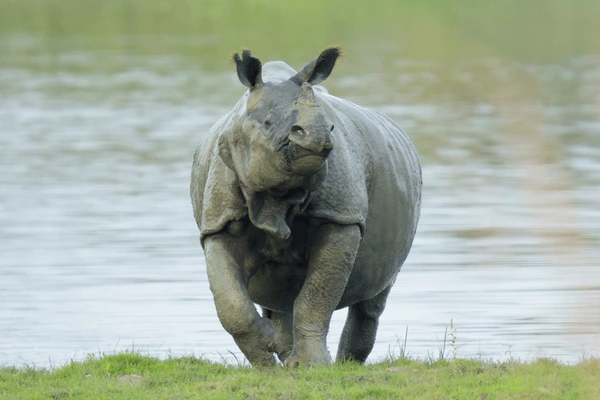
Think of Chitwan as a living, breathing storybook where every page opens up to a new character.
Besides the Bengal tiger of Chitwan National Park, a whole entourage of animals plays their roles, some big and some small, but all important.
Each one lends color, sound and movement, making the park one big natural theater that astonishes and entertains visitors.
Here are some wildlife of Chitwan National Park:
- One-horned rhinoceros
- Wild elephants
- Deer
- Mugger crocodile
- Leopards
- Wild boar
- Langurs
- Kingfisher
- Eagles
Activities to do in Chitwan National Park
The national park is not only a haven for tigers but also a blend of varied habitats, wildlife adventures and cultural experiences.
For both seasoned adventurers and curious travelers alike, there is something here for everyone.
It is also a huge national park, covering 367.81 sq mi and was declared a World Heritage Site, known as one of the best national parks in Nepal.
Here, every activity becomes an entry into a nature art gallery, where life unfolds dramatically with every turn.
Some major activities to do in Chitwan National Park are:
Jungle Walks
- Engage in a guided jungle walk right at the heart of Chitwan National Park, a premier World Heritage Site.
- Perceive a close-up interaction with various wild animals, from deer and wild boar down to the Bengal tiger in Chitwan National Park which makes the park famous.
- Go in for a serene, nature-friendly exploration of one of the best national parks in Nepal, full of beauty.
Jeep Safari
- Enjoy a jeep safari through lush forests and grasslands, which offer you the maximum chance to see tigers in Chitwan National Park.
- Uncover hidden corners of this animal paradise by driving through rugged tracks and dry riverbeds.
- Guided by expert guides, enjoy a safe and knowledge-driven journey into one of the most visited places in Nepal.
Bird Watching Tour
- Go on the bird-watching tour in Chitwan and find rare species of birds atop tall trees.
- Capture images of bright-colored kingfishers, eagles and storks in this natural haven.
Canoeing
- Enjoy a canoeing trip through calm waters and take in the scenic beauty of Chitwan National Park from a different angle.
- Observe mugger crocodiles basking along the riverbanks and birds flying over your head while boating.
- Experience an undisturbed ride complementing your experience with wildlife into serenity to the waterways of Chitwan.
Elephant baths
- Participate in elephant baths, an interactive action that allows you to view closely and engage with them.
- Understand the role of elephants in maintaining tigers’ habitats and the overall ecosystem of the park.
- Enjoy an unforgettable experience in one of the world heritage sites, combined with adventure and appreciation for nature.
Breeding centers
- Visit an elephant and other key species breeding center to support tiger conservation indirectly through ecosystem balancing.
- Understand the viable management strategies that help the survival of the royal Bengal tigers and other endangered species in sustainable wildlife.
- You can get insights into the significance of the breeding program that contributes to preserving this natural ecosystem.
Cultural Exploration
- Immerse in the local culture around Chitwan National Park and find out how people share a border with wild animals.
- Get a glimpse into indigenous Tharu culture, history and their way of living.
- Engage in cultural programs, taste local food and observe the handicrafts of local people.
Conservation Efforts for Bengal Tiger in Chitwan National Park
The status of the Chitwan National Park is deeply related to its success in the maintenance of a healthy population of royal Bengal tigers.
Besides attracting tourists, big cats are the heart pulsar of an extensive and complex ecosystem.
The protection of their future depends upon several conservation strategies.
Here are the strategies that Chitwan deploys to conserve its tigers:
Anti-poaching Initiatives
- The rangers of Chitwan National Park conduct regular and thorough patrols in the park, ensuring tigers remain safe from poachers and illegal activities.
- Chitwan utilizes surveillance tools such as camera traps and drones to monitor the tiger’s movements and any suspicious activities.
- In cooperation with national and international agencies of law enforcement, Chitwan has imposed stiff penalties on poaching and trading in tiger parts.
Habitat Protection and Management
- The park restores degraded areas to expand the tiger habitats
- Chitwan has established a buffer zone to minimize human-wildlife conflicts.
Research and Monitoring
- The number and health of the tigers in Chitwan are monitored through regular censuses of the population, including camera traps, genetic samplings and radio collar tracking.
- Genetic diversity studies within the population ensure health and resilience in the gene pool, avoiding inbreeding.
Community Engagement
- The park actively involves local communities by offering employment opportunities in park rangers, guides and eco-tourism-related activities.
- Awareness and educational seminars within the surrounding villages are conducted for the residents to inform them about tigers and their value in maintaining ecological balance.
Collaboration and Partnership
- Chitwan coordinates with other protected areas nearby, such as Parsa National Park, to provide tigers with a larger habitat.
- Participates in international conservation networks that allow the sharing of best practices, accessing more funds and influencing policies that favor the protection of Bengal tigers.
- Non-governmental organizations (NGOs) are partners that complement additional resources, expertise and support for conservation programs.
Rehabilitation and Rescue
- Chitwan carries out rescue operations for injured tigers by poachers or those involved in human-tiger conflicts.
- Chitwan National Park supports the breeding programs that help to improve the genetic pool and increase the population of Bengal tigers within the park.
Planning your Visit to Chitwan
A trip to Chitwan National Park is an opportunity to go deep inside one of Nepal’s primary wildlife sanctuaries.
Good planning will ensure a memorable and smooth experience of the park’s natural beauty and its diverse wildlife.
Here are some essential tips and information that will enable you to plan your visit:
Best Times to Visit Chitwan
The best time to visit Chitwan National Park is from October to March.
During these months, the weather is cool and dry, making it perfect for exploring the park and viewing wildlife.
Animals like Bengal tigers, one-horned rhinos and elephants are easier to see, as they come out into the open to find water.
This period is really good for jeep safaris, elephant rides and bird-watching since the animals in the wild are more energetic.
How to get to Chitwan National Park from Kathmandu?
You can reach Chitwan National Park from Kathmandu easily.
There are a few means which are:
By Air:
First, embark on a flight from Kathmandu International Airport to Bharatpur Airport.
It is quite easy and takes around 30 minutes.
After you land at Bharatpur Airport, take a taxi or bus and head towards Sauraha, where you can engage in many jungle activities.
By Road
Hire a private car or taxi which provides more comfortable if you are traveling alone or with your family.
Some sections of the road are under construction which may pose a little discomfort in small vehicles.
You can also journey on tourist buses that are more comfortable under these circumstances.
It takes around 5 to 6 hours to reach Chitwan and an additional 40 minutes to reach Sauraha.
Conclusion
Traditionally, Chitwan had been the domain of the Bengal tiger, threatened by poaching and loss of habitat.
Thanks to active conservation for years, tigers are growing in number here.
Today, a visit to Chitwan allows you to see these magnificent predators in their natural surroundings.
Everything from jeep safaris and elephant rides for thrills, to tranquil bird-watching drives and visits to the local Tharu villages, are all part of Chitwan.
Are you adventurous enough to observe Bengal tigers in Chitwan National Park?
Plan your Chitwan a
FAQs
When is the best time to see Bengal tigers in Chitwan National Park?
The best time to see Bengal tigers in Chitwan National Park is from October to March.
The trekking conditions are optimal and spotting wildlife is easier.
What activities can I do in Chitwan to see Bengal tigers?
In Chitwan, you can engage in activities such as Jeep safaris, elephant rides, bird watching, canoeing and jungle walks.
These activities enhance views of the majestic Bengal tiger during sightings in their natural setting.
Do I need any special permits to visit Chitwan National Park?
Yes, you need a Chitwan National Park permit to visit the park.
What should I do if I encounter a tiger during my visit?
If you encounter a tiger during your visit, first, you must stay calm and keep a safe distance.
Don’t try to run and show your back to the predator.
Listen to your guide’s instructions for your as well as the wildlife safety.
Are there any special tours focused on seeing Bengal tigers in Chitwan?
Tour Operator Nepal has tour packages that include tiger seeing as part of a larger tour.
You can customize any special tour you want with us.